
Menu
Hezekiah
By Mark Morgan | Miscellaneous
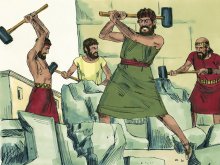
About 250 years after David died, Hezekiah became king over Judah as the fourteenth king in the dynasty David began. Not many of those kings imitated King David’s wholehearted devotion to God, but Hezekiah was one who did.[1] He was a rare beacon of light, who promoted godliness in the face of growing idolatry as the kingdom declined.
Nowadays, most national leaders are old, but Hezekiah was only 25 years old when he took over from his father, king Ahaz.
Many suggest that the kings of Judah at this time ruled as co-regents with their predecessors and/or successors. Theoretically, this could help with an orderly transfer of power, but what if they had completely different attitudes to life? How could two kings with completely different attitudes to religion ever rule together? King Hezekiah is such an example, a worshipper of Yahweh sandwiched between two generations of idolaters. Neither his father Ahaz[2] nor his son Manasseh worshipped God.[3] In fact, Manasseh was the king who contributed most to God’s decision to punish Judah by sending them into captivity.[4] Yet despite the evil before and after him, Hezekiah was one of the most godly kings of Judah.[5] This is an unusual situation – perhaps he learned godliness from his mother Abi.[6]
While Ahaz reigned, God punished the nation for his idolatry,[7] and Ahaz responded by closing the doors of God’s temple[8] – as if God had somehow let him down! When Hezekiah became king, he re-opened the doors of the temple on the very first day of his reign.
He gathered the priests and Levites together and told them to consecrate both themselves and the temple to God, explaining that previous generations had turned their backs on God and brought his anger as a result. He enumerated the recent disasters suffered by Israel and Judah as well as those that threatened, portraying them as the direct result of abandoning God.
Hezekiah then explained his plan for reformation. He planned to make a new covenant with God, one that reaffirmed earlier national commitments to serve God. His vision was for all the nation to worship Yahweh, the God of Israel.
But first, God’s temple must be cleaned up – and it was not just that a few years’ dust had accumulated! Ahaz had changed many things in the temple building and the courts to shape its worship to his idolatrous preferences. These changes must be reversed, the symbols of idolatry removed.
Fourteen Levites, including some priests, responded enthusiastically. Motivating their relatives to join them, they quickly consecrated themselves and began cleaning up the temple.
Entering the temple buildings time and again, hardworking priests carried all the accumulated rubbish into the temple courtyard for Levites to carry out of the city and dispose of in the Kidron Valley.
After seven days of diligent work, the priests had emptied the holy place and reached the doors of the most holy place. Another nine days were spent cleaning out that sacred area and rededicating it to God.
After 16 days of work, the rubbish was gone and all the dedicated objects and utensils that Ahaz had discarded during his reign were ready once more for use in worship. Everyone who cared about God was ready to rejoice.
Perhaps it was only at this stage that they realised one sad fact: they had missed the Passover. God’s commandment was that they keep it every year, yet it had not been kept for some time, and now they had missed it for another year.
They were just two days late.
However, the law included a special provision for people who could not keep the Passover on the fourteenth day of the first month as God had specified. In certain circumstances, people could keep the Passover one month later, on the fourteenth day of the second month.
Could the entire nation take advantage of this provision?
Well, not really. The conditions for keeping a late Passover were specific: only those unclean through contact with a dead body or away on a long journey could commemorate the Passover late. Those were the only exceptions God had given. Everyone who didn’t meet those criteria must keep the Passover in the first month. Without fail.
Maybe they should just wait until next year.
Yet God had also said that anyone who failed to keep the feast must be excluded from the assembly. In this case, that meant everybody! Had they worked so hard to restore national worship in a newly dedicated temple only to miss by two days and be forbidden from worship anyway?
On the face of it, that was exactly the situation.
Yet some saw another option. True, God had only mentioned uncleanness due to touching dead bodies, but surely it was religious uncleanness that had prevented the whole nation from keeping the Passover! Why not keep the Passover one month late? Surely God would prefer that over not keeping it at all.
Perhaps Hezekiah made the decision himself, or possibly it was on the advice of priests and Levites. Either way, the suggestion had his support and the invitations went out all over Judah and even into hostile Israel.
It was a time of expectant rejoicing and people came from all over Judah. Some even came from Israel. Jerusalem was filled from end to end as everyone kept the Passover with joy. A wonderful victory of godliness over idolatry, you might think, but, despite the delay, many of the people had not made the effort to cleanse themselves to meet God’s requirements. The record in 2 Chronicles 30 makes it clear that God sent a plague on the nation because of this disregard of his rules.
This plague was the first national emergency in Hezekiah’s reign and he responded in a way that became a hallmark of his reign in later emergencies: he prayed.
God listened and the people were healed.
The celebration continued.
Presumably the important lessons were learned: God was not an indulgent grandparent whose rules could be ignored with impunity, yet he was also forgiving and gentle if the motives were right.
When the seven days of the feast were completed, the people decided to continue celebrating their revived worship of God for another seven days.
For Hezekiah as a new king, it was a wonderful victory of godliness over idolatry. His faith in God was vindicated.
However, it’s also worth considering a few details of this wonderful episode again. The Bible narrative makes it clear that the first month of his reign was the first month of the year, in which the Passover was to be kept on the fourteenth day. Thus, Hezekiah became king on the first day of a new year.
Now it’s not unusual for people to begin new employment on a date like the first of January, but if a son inherits the kingship on the death of his father, that is much more likely to happen on some random date than on the first day of the year. However, if an existing king has decided to hand over to his son some or all of his powers, a more significant calendar date may be chosen for the handover.
This, then, may represent a shared reign – often called a co-regency – or even a complete abdication where the previous king resigns and hands over the reins to his son.
Two generations earlier, we have a concrete example of a co-regency between Uzziah and Jotham – Ahaz’s grandfather and father, respectively. Uzziah tried to usurp the position of the Levitical priests by entering God’s temple to burn incense himself. The priests resisted him and God struck him with leprosy. Since lepers were not allowed to have ordinary interaction with others, Uzziah lived in a separate house until his death, while his son Jotham ruled over the kingdom. We are not told how long this situation lasted, but it was probably at least two years.[9]
If Hezekiah began to reign while his father was still alive, it seems most likely that Ahaz was unwell and thus unable to resist Hezekiah’s resolute change of religious direction for the kingdom. After all, Hezekiah undid many of the things Ahaz had done during his reign. I believe the most likely situation is that Ahaz’s health was declining (although he wasn’t very old!) and that he arranged for Hezekiah to assume the kingship at the start of the calendar year. When the handover took place, Hezekiah immediately began to make the changes he believed necessary.
His religious reforms were effective and the kingdom of Judah thrived, while to the north, the kingdom of Israel had been attacked by the Assyrians and taken away into captivity.
Then, after Hezekiah had reigned for fourteen years, the Assyrians did what many had feared: they attacked Judah.
[To be continued]
Bible Tales article: Keeping the Passover
Bible Tales article: David’s legacy
Bible Tales article: King David’s Family Tree
King David (Wikipedia)
Notes
| ↑1 | 2 Chronicles 29:2 |
|---|---|
| ↑2 | 2 Kings 16:2; 2 Chronicles 28:1, 19, 22, 24 |
| ↑3 | Manasseh did repent near the end of his life and worship God (2 Chronicles 33:11-13). |
| ↑4 | 2 Kings 21:9, 11-16; 23:26; 2 Chronicles 33:9; Jeremiah 15:4 |
| ↑5 | 2 Kings 18:5 |
| ↑6 | 2 Kings 18:2; 2 Chronicles 29:1 |
| ↑7 | 2 Chronicles 28:19 |
| ↑8 | 2 Chronicles 28:24 |
| ↑9 | This is based on the report that Jotham reigned for 16 years (presumably as sole or chief king), yet we read that King Hoshea of Israel began to reign in the 20th year of Jotham, probably counted from the time when he began to reign during Uzziah’s life (2 years?) and possibly some time after he had handed over the kingship to his son Ahaz (another 2 years?). |